Wooden joins like those that use wooden pins are preferable to metal nails and screws in construction that will be exposed to the elements. The reason is a simple one – a rusted nail contributes to rotting wood, weakening the construction. A securely fastened join using wooden pins is stronger and lasts longer than most metal and wood construction.
There are a number of construction firms that specialize in timber frame construction of cabins and cottages, using all wood joins, including wooden peg and wooden pins as fasteners.
The idea of fastening wood together using wood may seem strange to anyone that’s not a woodworker or cabinet maker. After all, what else is a hammer and nails for? Or a screwdriver and drill and screws? Any fine furniture maker can tell you different, though. The use of mortise and tenon, dovetail and wooden pins joining methods are all common methods that go back far into history – and are still used NOT for historical accuracy, but because they are simply the better way to hold wood together.
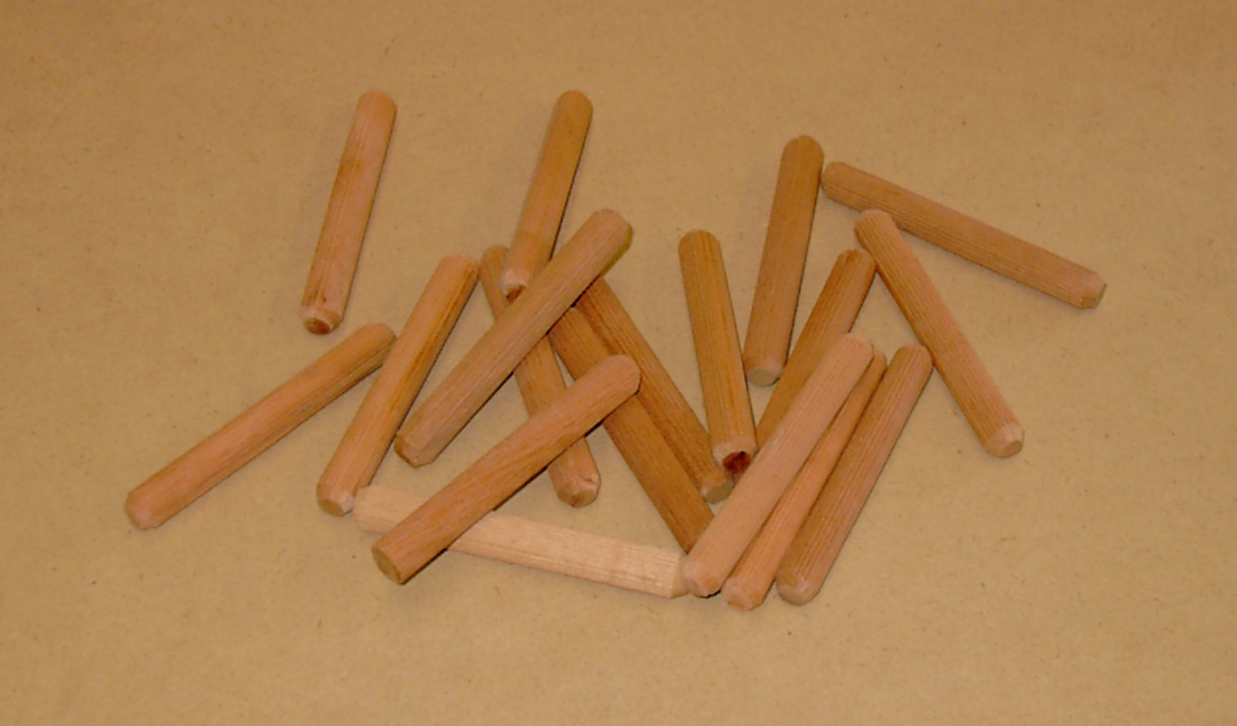
Wooden pins are made from dowels, generally a hardwood. They’re often pre-shaped with a rounded or tapered tip to make insertion easier. They may be smooth or grooved to hold glue better, and they are available in many different lengths. The finished quality of your furniture can’t help but be affected by the quality of the wooden pins used in its construction.
You can purchase wooden cabinet makers dowels for all your projects from Dowel Australia, in sizes from 8-15mm and with either a smooth or fluted finish.
A Brief History of Wooden Dowels and Dowel Pins
There haven’t always been iron and steel nails to use in construction. Long before nails and screws became the standard in woodworking and construction – whether it was furniture, ships or building construction – wooden dowels, dowel pins and pegs were the go-to solution for joining timber. Even now, construction using wooden pins, dowels and pegs is a hallmark of quality.
Their use dates back thousands of years, with examples found in ancient Egyptian furniture, Greek temples, and traditional Japanese joinery.
Ancient Origins
Archaeological discoveries show that as early as 3,000 BCE, Egyptian woodworkers used cylindrical wooden pegs to join pieces of furniture and secure planks in boats. These early dowels were hand-carved from hardwoods and shaped to fit tightly into drilled holes, often reinforced with natural glues made from animal hide or plant resins.
In ancient Greece and Rome, wooden pegs played a crucial role in architecture. Massive stone blocks in temples and public buildings were sometimes connected using hardwood dowels driven into drilled sockets — a practice that helped keep structures stable even during earthquakes.
Medieval and Renaissance Craftsmanship
During the medieval period in Europe, dowel pins became a cornerstone of carpentry, particularly in timber-framed buildings. Wooden pegs — often called “treenails” or “trunnels” (short for tree nails) — were used to secure mortise-and-tenon joints in everything from houses to ships.
By the Renaissance, cabinetmakers and furniture builders across Europe were using dowels to create precise, seamless joins. The technology had improved: dowels were now turned more uniformly using early lathes, ensuring a better fit and stronger bond.
The Age of Timber Framing
From the 16th through the 19th centuries, timber framing was a dominant building method in Europe and North America. Dowel pins, usually made from oak or other dense hardwoods, were used instead of nails to secure beams. This wasn’t just tradition — it was practicality. Nails were expensive, prone to rust, and less flexible than wood. Wooden pins, on the other hand, swelled slightly with humidity, locking joints even tighter over time.
On sailing ships, wooden pegs were widely used to fasten planks to the frame, a technique that resisted corrosion from seawater far better than iron nails.
Industrialisation and Modern Dowels
The Industrial Revolution brought mass production of both metal fasteners and wooden dowels. By the late 19th century, machine-turned dowels could be made with incredible precision, opening the door to furniture factories and kit-based assembly.
In the 20th century, cabinetmakers’ dowels became standard in furniture production, especially for flat-pack and modular designs. Fluted dowels, introduced in the mid-1900s, allowed glue to spread evenly for an even stronger joint.
Why They’re Still Used Today
Despite the widespread availability of screws, nails, and metal joiners, wooden dowels and pins remain a hallmark of quality craftsmanship. They’re strong, inconspicuous, and won’t rust or stain timber. Many heritage restoration projects still rely on traditional pegged joints for authenticity and longevity, while modern furniture makers appreciate the clean, metal-free finish.
From ancient ships to contemporary designer furniture, wooden dowels have stood the test of time — not just as a relic of history, but as one of woodworking’s most effective and elegant solutions.
For all your dowel pin requirements in Australia contact Dowel Australia
Leave a Reply